

Most people start looking for a renovation vendor before they've decided what kind of vendor they're looking for. Then, they collect quotes from three parties doing three different jobs and wonder why nothing lines up, having a hard time to compare apples to apples.
There are three routes, none of them is the correct one. But they fail in different ways, and the difference only matters when something goes wrong. Here's how I'd choose, and the part most articles leave out: who is actually answerable when the work doesn't match the drawing.
Sub-contractors, hired directly. You engage each trade yourself — wiring, plumbing, tiling, carpentry, aircon — and you decide who comes when. This is the cheapest route by some distance, and it works. It also assumes you know the construction sequence: that wiring has to close before plastering, that the floor finish level is settled before the doors are ordered, that the plumber comes back a second time and needs to be there on the right day. Get the order wrong and you pay twice — once to do it, once to undo it.
Main contractor. One party takes on the trades and manages them for you. You still have to get your ideas across. Many contractors here work directly with homeowners rather than with designers, so they're used to being told an outcome rather than handed a drawing — you say what you want the kitchen to do, and they work out the details and the steps themselves. Plenty of them are very good at this. But it does mean the details end up decided by whoever is holding the tools that day, and not everyone reads a drawing the same way.
Architecture/ interior design firm. They design. They plan the space, choose the materials, and produce the drawings. Some then pass the package to a contractor and supervise it; some pass it over and step back. The construction contract may not be with them at all — worth asking early, because it decides a lot later.
Design and build studio. Both, under one contract. The people who drew it are the people who build it, and the money for design and construction sits in the same place.

Read that list again and you'll notice that the difference isn't only the price.
Hire subcontractors and every decision, every sequencing mistake and every gap between trades is yours. Hire a main contractor and the sequencing becomes theirs, but the design decisions are still yours by default. Bring in a designer and the decisions move across too. Put design and build under one contract and the gap between the two closes as well.
Each step up costs more because each step takes something off your plate. Cheap isn't cheap — it's unbundled and broken into many smaller packages. You're not really buying a lower price. You’re swapping the price for risks. So when one route comes in well under another on the same scope, that's not automatically a better deal. It's a question: what responsibility and risk have I quietly agreed to carry?
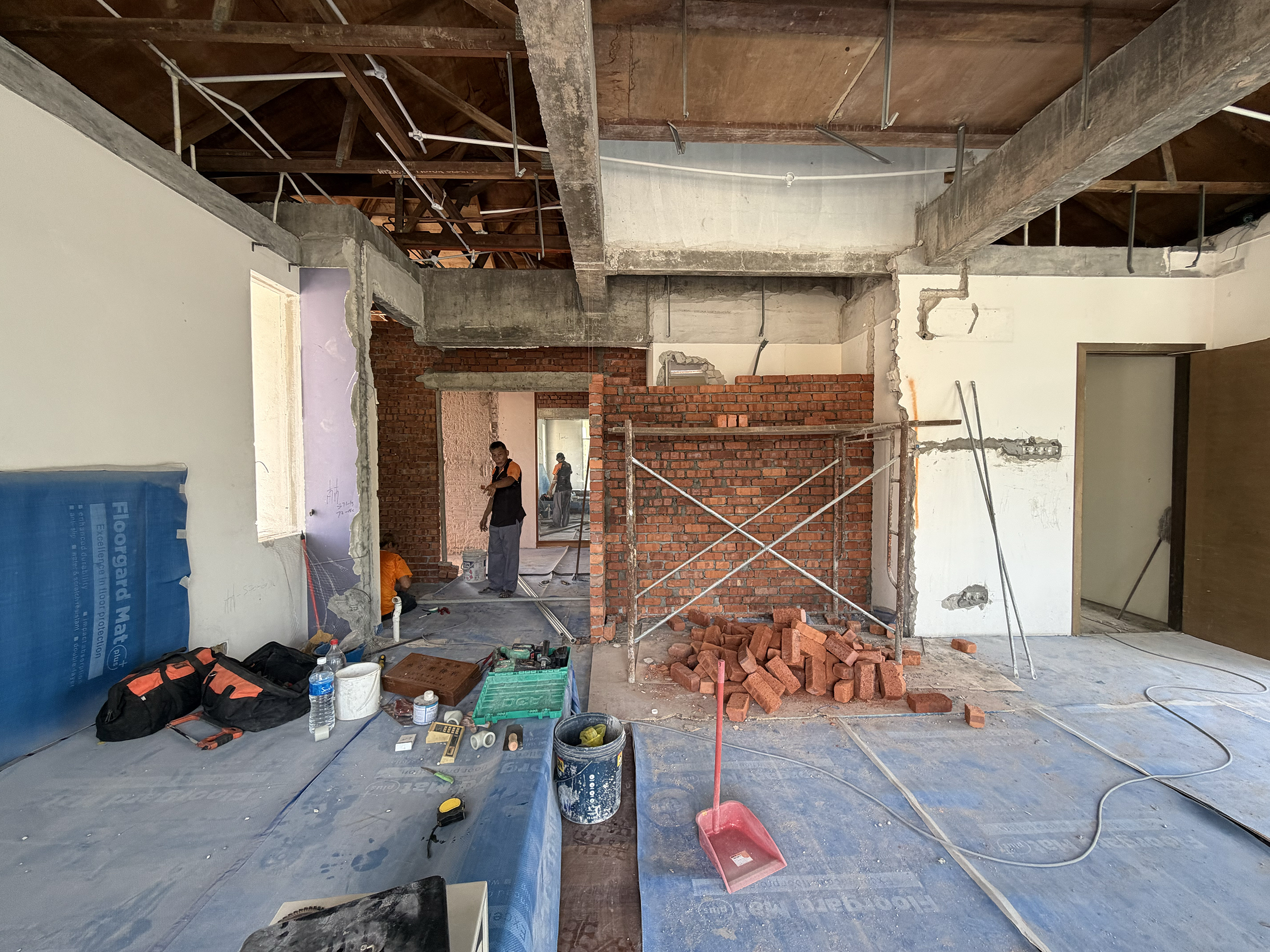
On site, problems usually come from one of two places. Either the drawing was wrong, or the drawing was right and the work didn't follow it. When design and construction sit with different companies, those two potential problems belong to two different parties — and both have an obvious interest in it being the other one's fault.
You end up in the middle, holding a defect and two explanations, with no way to judge either. I've been called into projects at exactly that moment. It's rarely that anyone was dishonest, it’s that nobody was clearly answerable.
Under one contract that argument has nowhere to go. If the drawing was wrong, it's mine. If the site didn't follow it, that's mine too. You don't have to work out which — and that, not convenience, is what that model is actually for.
The trade-off is real and worth saying: fewer parties means fewer people checking on each other. You're buying a single point of accountability, so satisfy yourself that the single point is worth trusting. That's why it is important to know what to ask them when you first meet.
Sub-contractors if you've done this before, know the sequence, and can be reachable during working hours. The savings are real, and so is the job you've taken on.
A main contractor if the scope is defined and mostly technical — rewiring, waterproofing, replacing windows, redoing a bathroom to the existing layout. If you know what you want built and can describe it clearly, paying someone to design it does not bring you any value.
An architecture/ interior design firm if design is the hard part and you have the time and appetite to manage the build, or a contractor you already trust. Some people genuinely enjoy this.
Design and build when the project is large, when the design and the construction are entangled, or when you'd rather not be the person deciding whose fault something is. Seri Puteri Townvillas, a 3,600 sqft townhouse, is that kind of job — a full re-plan across three storeys, and dozens of decisions where the design and the buildability had to be decided in the same conversation. Split across two parties, most of those conversations become emails/ WhatsApp messages.
Be honest about the middle options in particular. Managing a build is not a weekend activity. It's decisions on site, at short notice, from people waiting on you — and it happens on working days.

This is where most people get lost, because the four quotes aren't measuring the same thing.
Subcontractor prices exclude coordination. A main contractor's number excludes design. An ID firm's may or may not include supervision, and the construction may sit elsewhere. A design and build figure includes everything, so it looks highest until you add the missing pieces back into the others.
And design folded into a build cost and called free isn't free — it's just unpriced. I went through that in The Same House, Three Quotes. Put the same scope against all four before comparing anything. Then ask each of them who carries the cost if any work has to be redone.
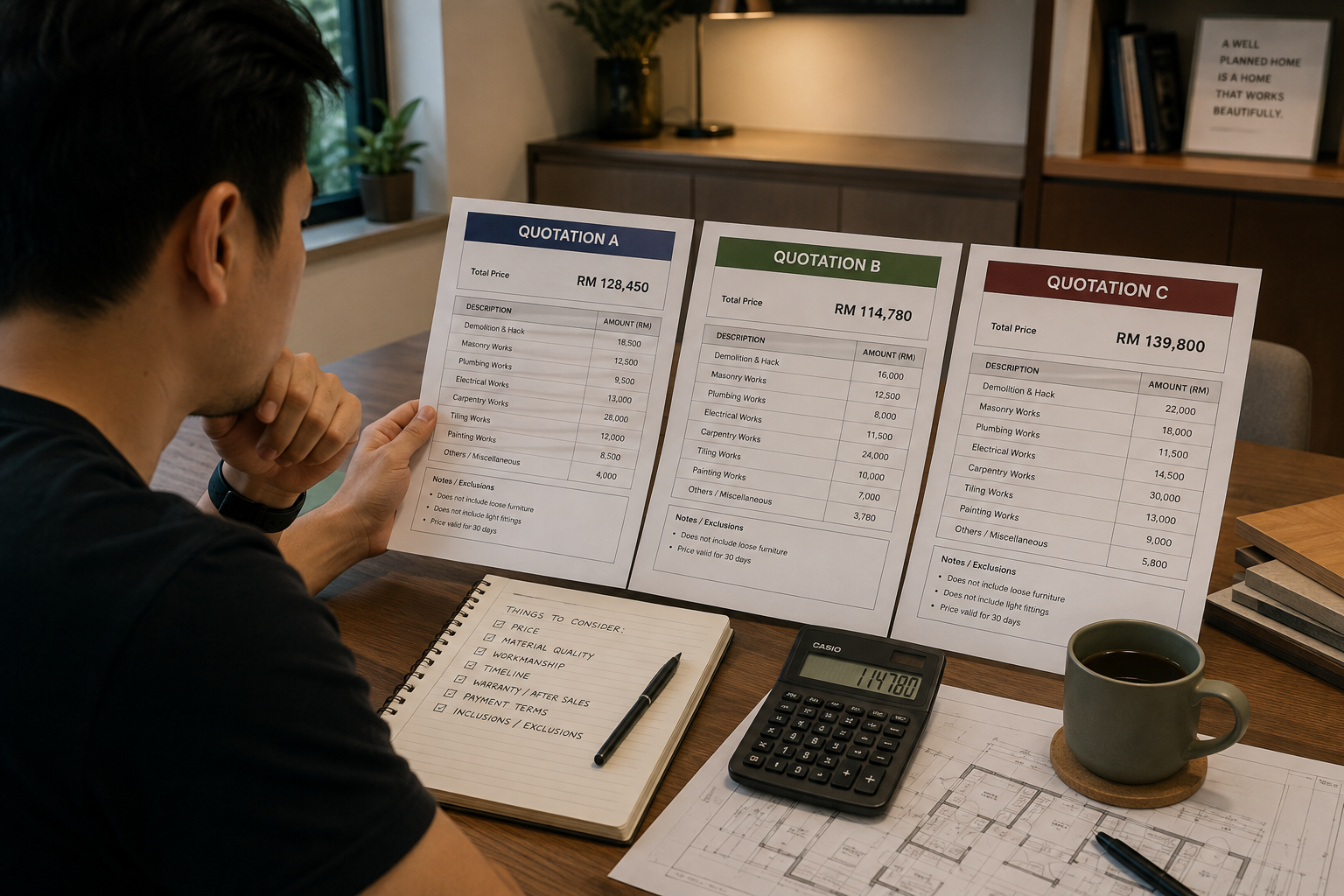
The question underneath: You're not just choosing a service, you're choosing who is taking the most risk.
Do it yourself and it's yours. Split it and it's shared — which, in practice, means it's yours again the moment the two parties disagree. Put it in one place and it belongs to whoever you chose, which is only a good outcome if you chose carefully.
No route removes the risk. There's only deciding who is holding it, in advance and on purpose.